Expanded detection of early fibrotic phenotypes using lobar traction bronchiolectasis in lung cancer screening
Plain Language Summary
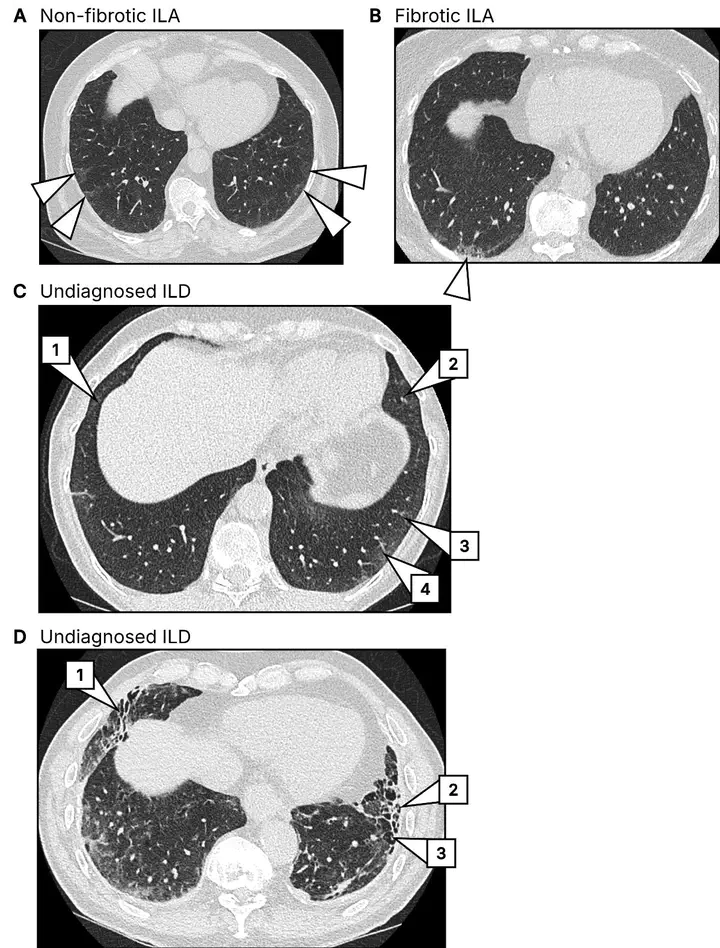
This study evaluated a classification system for interstitial lung abnormalities using lobar traction bronchiolectasis as a marker in lung cancer screening participants. Among 8,169 participants, those with subclinical interstitial lung disease had higher rates of respiratory hospitalisation and increased mortality risk, suggesting improved detection of clinically relevant early fibrotic phenotypes.
Abstract
Interstitial lung abnormalities (ILA) identified during lung cancer screening carry prognostic significance, but classification approaches vary. Using lobar traction bronchiolectasis as a marker for subclinical interstitial lung disease, this study categorised 8,169 lung cancer screening participants. Participants with subclinical ILD (U-ILD) had a higher rate of respiratory hospitalisation and increased mortality risk compared to those without ILA, demonstrating that this classification approach expands the detection of clinically relevant early fibrotic phenotypes in a screening population.