Smaller lungs on screening CT flag higher mortality risk in PRISm: new paper in The Lancet Medical Imaging & Theranostics
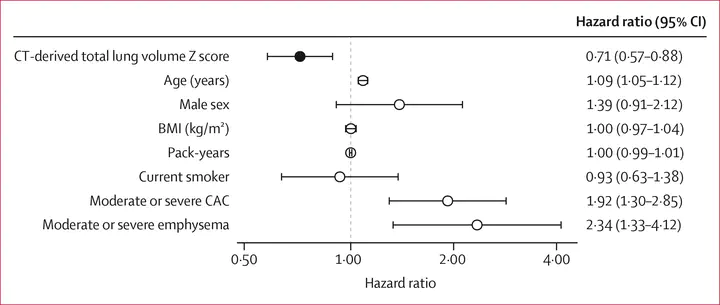 Adjusted mortality risk within PRISm according to CT-derived total lung volume (Figure 4 of the paper).
Our study on CT-derived total lung volume in people with preserved ratio impaired spirometry (PRISm) has been published in The Lancet Medical Imaging & Theranostics.
Some smokers have reduced lung function on breathing tests without the airflow blockage seen in COPD, a pattern called PRISm. People with PRISm are more likely to die early and to have heart and metabolic disease, but breathing tests are often not done in lung cancer screening. Using CT scans from over 7,500 people in the SUMMIT lung cancer screening study, we automatically measured the total size of each person’s lungs. People with PRISm tended to have smaller lungs, and among them, those with the smallest lungs were at the highest risk of dying. Because these scans are already taken for screening, lung size could be measured at no extra cost to flag people who may need breathing tests and closer follow-up.
Read the full paper: CT-derived total lung volume and mortality risk in smokers with preserved ratio impaired spirometry: a lung cancer screening cohort study (open access, doi:10.1016/j.lanmit.2026.100034).